
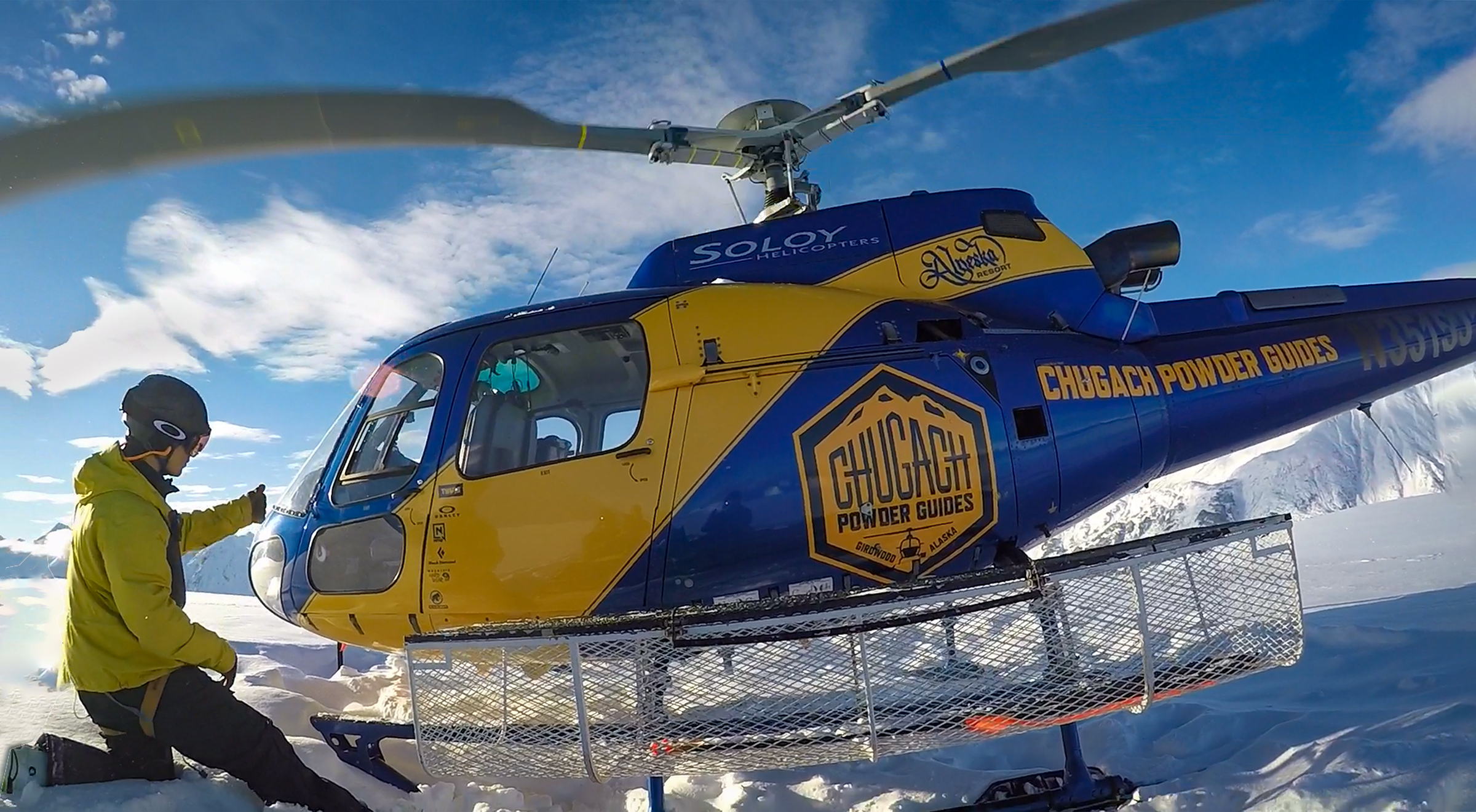
Skiing is an awesome, low impact sport. If you are looking for a way to get some exercise this is great option. Here is everything you need to know. Whether it’s a nagging problem with your ski gear or you want to learn advanced skiing techniques for conquering the moguls we have you covered. This is a picture from my heli-ski trip at Alyeska Resort.
Instruction
Safety | Stance | Turning | Advanced | Clinics | Tuning | Avalanche
Safety
Proper skiing instruction is the key to mastering the most challenging slopes. The following information is intended to supplement and enforce the skills taught by a knowledgeable ski instructor. Let’s discuss safety first.
I recommend wearing a helmet. the British Medical Journal reports that the risk of head injury may be reduced by 29 to 56% when wearing a helmet while skiing or snowboarding. My helmet has saved me from major injury on several occasions. Before proceeding down the mountain, look up the mountain for oncoming skiers and respect their right of way. Always stop in an area that oncoming skiers can see you, preferably off to the side of heavily skied areas. Always stay in control of your speed and respect designated slow skiing areas. Remove your pole straps before getting on to the lift. If you totally lose control, purposely fall (preferably to the side or frontward) to avoid leaving the trail and/or hitting a tree, lift tower, or snow making equipment. Never fall backwards as you will lose control over your skis.
Stance
Stance is critical to becoming an expert skier. Forward, Forward, Forward … The top reason skiers have difficulty with advanced terrain is that they have fallen back in their stance. Unfortunately, this is a natural reaction to fear. It is critical to stay forward when you are skiing at all times. So what does forward mean?
In a proper stance your chest should be directly above your toes with a slight bend at the waist. This will adjust some when you’re skiing, but it is a good mind set. There should be a slight bend in your knees and your shins should apply a comfortable pressure to the front of the boot. Keep your poles out in front of you and to the side, with arms slightly bent and your elbows in line with the front of your chest and 7-8 inches from your sides. Keep your chin and eyes up and be ready to anticipate turn shapes.
Turning Basics
There are really only a few skills you need to make elegant parallel turns. Your skis should be 6-10 inches apart (this will vary some with different terrain).
Parallel turns are completed by rolling your ski from edge to the other edge using your legs and hips. To visualize this, roll your foot from your big toe to your little toe (or vice versa) with more pressure on the balls of your feet. When you roll your shaped ski, it will naturally carve the snow and make the turn as you slide down the mountain. Apply slightly more pressure on your outside ski (60% outside, 40% inside). Your inside knee should bend more and move slightly forward of your outside knee as you go through the turn. As you transition from one turn to the next, there will be a moment or two when your skis are perfectly flat with the snow.
If you want to make a shorter radius turn, actively steer with your lower body by pushing your heels out to one side while rolling your skis. To visualize this, sit in a chair with your feet off the ground and kick both of your heels to the right and then to your left, simulating a windshield wiper.
You may notice that the inside ski is tougher to roll and push the heel out. This happens with everyone I know when they began. Later, I will provide some drills to strengthen this movement. For now, do several runs without your poles on easy terrain. When you feel your inside ski start to drag, give it a little help by pushing outward on your inner thigh with your hand. Again keep your poles out in front of you, arms slightly bent and your elbows 7-8 inches from your sides keeping your upper body steady as you move in and out of your turns. It is helpful to plant your inside pole and ski around it (don’t let your poles drag behind you). After you get comfortable with single turns begin to link your turns and play with their size. Again it is important to keep your shins against the front of the boot, your chest over your toes and move your body down the mountain as you roll your skies.
To stop, tighten the radius of your turn (slightly more roll of the ski) putting more pressure on your edges and bringing your skis perpendicular to the downward slope of the hill by pushing out your heels in the same direction (as described above). This is a little tricky at first but will become easier after a few tries. However, it is essential to master this before you attempt challenging blues.
Advanced Techniques
Advanced Carving / Increased Ice Grip requires proper stance and bringing both your up hill (inside) ski and down hill (outside) ski equally on edge. A common mistake in carving is having your down hill ski on edge but your up hill ski flat or at less of an angle with the snow than the down hill ski. First lets review stance. It is important to keep your feet 6 – 12 inches apart (varying with your height) and your thighs separated 2-3 inches as well (avoid having your thighs touch). Secondly, your shins should be angled forward having a light pressure on the tongue of the boot with a slight bend in the knee. To visualize this, sit in a chair with your feet touching the floor and your feet and legs perpendicular (or 90 degrees) to each other. Now slide your feet backward under the chair and notice the angle between your foot and shin decreasing (shin angling forward) and your heel wanting to rise off the floor.
As you make your turn, your up hill boot and down hill boot should be even or the up hill boot should be slightly forward of the down hill boot. This stance will enable you to bring your up and down hill skis with an equally greater angle with the snow by rolling then tilting the skis by moving your hips toward the center of the arc you are turning. The further you tilt your skis (or bring then on edge) the more your up hill (inside) knee with bend (toward your chest) and your down hill leg will extend. As this occurs, it is important to pull your up hill boot back beneath you to maintain a 65-75 degree angle between your foot and shin. You also want to maintain the slight bend in your down hill knee. When the ski is on edge, you will carve with the natural radius of the ski. At the end of your turn, you will roll your ski to the other edge and repeat the process above. Let’s review the photo below to illustrate these points.
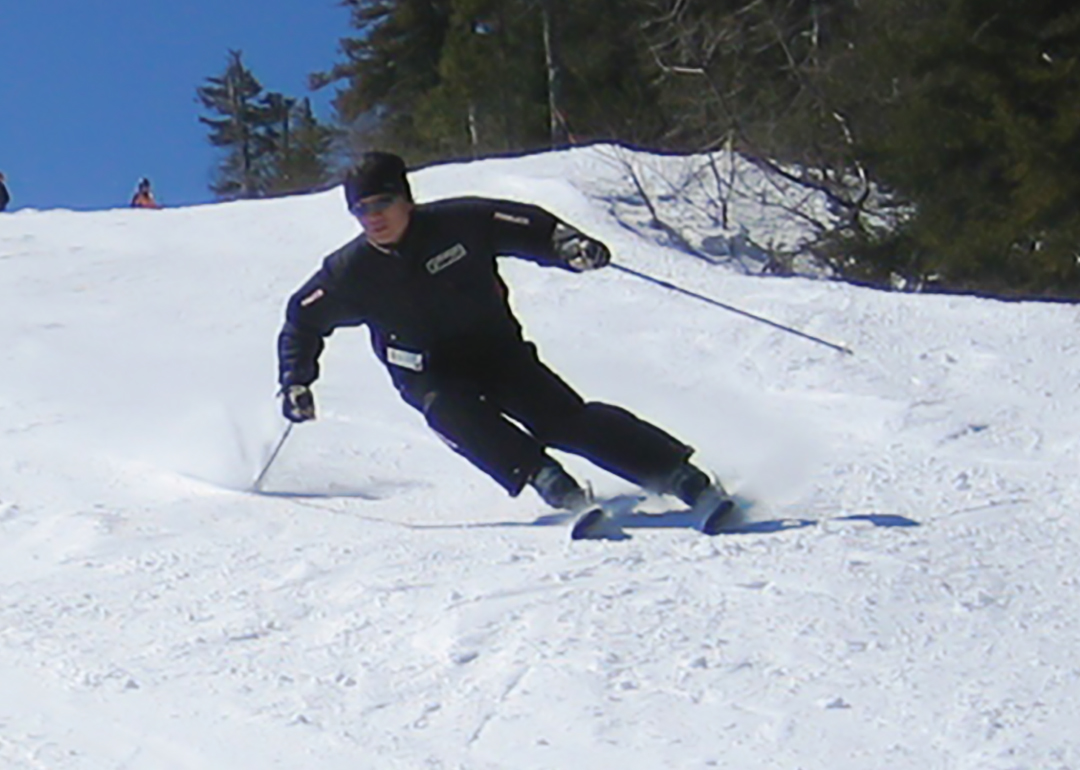
Here you can see Katsumi’s skis are about 10 inches apart and there is space between his thighs, both his edges are equally on edge and angled with the snow, his hips are inside his skis toward the center of the arc, there is a bend in his down hill ski knee and a larger bend in his up hill ski knee (bringing it towards his chest) and both his arms are slighly infront of him and to the side.
As you begin to master this approach, you will feel your skis’ edges making better grip with the snow. To ensure good edge grip on ice (I’m talking the menacing kind in the Northeast), you must also have sharp, well maintained edges (visit the tuning page on this site). Ski design also has an effect on edge grip, with some skis performing much better than others. If you are continually skiing in areas notorous for ice, you want to select a ski with good grip.
Speed control is accomplished through short radius turns and is key to mastering the steeps. Each ski has a natural turn radius and if your turn is shorter than the natural turn radius of the skis, you will slide across the snow (very similar to stopping). To tighten the radius of your turn, actively steer with your lower body by pushing your heels out to one side while rolling your skis so it comes perpendicular with the mountain faster than if you were to follow the natural turn radius. It is important that you apply even pressure on your edges throughout the turn. Applying a small amount of pressure at the beginning and more pressure at the end of the turn creates instability and makes it more difficult to control speed. This is called the windshield wiper effect.
Pressure control is totally dependent on the conditions, terrain and type of skiing. In deep powder or moguls, it is better to apply more even pressure (50/50 or 60/40). If you’re on a slalom course at high speeds, it is better to be (70/30 or 80/20). The best rule of thumb is to adjust your pressure to match your skiing type and environment.
Balance comes back to staying forward – shins against the front of the boot and your chest over your toes moving your body down the mountain as you roll your skies from edge to edge (I am purposely repeating myself) and using your poles properly. With your arms in position (see above stance or turning basics), plant your pole on the inside of each turn doing so with minimum movement. As you move through the turn, your wrist should move forward and your pole should release from the snow. In addition, keep your head up and look 2-3 turns ahead.
Moguls / Trees are some of the most challenging yet rewarding and fun terrain. The reason they are so challenging is because this terrain magnifies small imperfections in your technique. The good news is that bumps and trees are very manageable with the skills learned above and a little bit of practice. However, there are a few additional skills that are key to success; bump absorption and turning path. Bump absorption is the act of retracting of your feet and legs as you pass over the top or a portion of the bump while keeping your upper body steady. Turn at the crest (or peak), either side or the back of the bump (avoid the bottom of the rut). Use the absorption process to slow your forward momentum. Apply light pressure when you hit the front of the bump and apply even but firm pressure as you complete your turns on the back or sides of the mogul. Stay forward on the balls of your feet moving your upper body down the hill (i.e. avoid the back seat). Actively steer with your lower body by pushing your heels to one side while rolling your skis to produce short radius turns. As you build confidence experiment with your path; ski from one crest to another, vary short turns and carved turns, do a jump or vary your direction. As for trees, avoid them at all measures because it really hurts when you hit one.
Deep Powder is another challenging condition for those living in the east because it magnifies improper technique and it doesn’t appear on a regular basis (groomers are very forgiving). Again with the skills learned above there is little you have to change. Just remember to use more even pressure distribution and ski smoothly with no abrupt changes (stay smooth or you lose). Uneven pressure or abrupt changes will cause you to sink in the snow. Also remember to turn less. Natural snow has very high friction and as a result smaller turns slow you down faster than on groomers. You may also want to try a wider ski that has better float on the snow.
Jump Turns are not used often but come in handy when skiing the extreme. Often times out west, I have encountered extremely steep and narrow shoots and my only alternative to control my speed and get through a dicey situation was 180° jump turns. They’re done just like they are written, jump and turn your body 180°. It might be tricky at first but you will get the hang of it after practicing on easier terrain.
Drills
Here are some practical drills to improve your technique.
Edge locks (a.k.a. railroad tracks) are a great way to work ski roll, balance, leg position and speed. Roll the ski on its edges using the lower half of your body, let it carve the snow naturally and transition to a lateral movement after bringing the ski flat with the snow. After you feel comfortable doing single edge locks in it either direction, begin to link into one continuous motion down the mountain.
Ankle pivots are excellent for building rotary strength in the lower leg. Keeping your skis flat on the snow, kick both your heels from side to side as you move down easy terrain simulating a windshield wiper.
Stepping is used to improve your balance and stance. Walk up and down a mild grade and feel the pressure against the tongues of your boots. This feeling is very similar to the pressure you should feel when you are in the proper stance. Walking in the snow up and down a hill helps you to focus on proper balance.
One ski turns are very challenging but unmatched at building overall balance and rotary strength in the opposite direction of normal turns. Lift one ski or only apply a small amount of pressure on it (<10%) and ski on one ski. Initiate turns by rolling your ski and applying even pressure throughout the turn. You can shorten the radius of the turn by pushing your heel in the opposite direction of that you are heading. Practice this with both legs until it feels comfortable.
Short radius / long radius turns should be part of your warm up each day. Vary the speed and radii of your turns until your comfortable in all situations.
Descending 360° turns are done without leaving the ground and improve ski roll. Start with a normal turn and continue 360° rolling your ski such that the edge is always up in the direction you are turning. Practice 360’s in either direction then link a few in a row. Just be careful not to become dizzy.
Ski Clinics
The are a variety of ski camps and clinics throughout the nation offered each year. The following are a few that stand out to the SkiEnthusiast team for value or being unique. Women should take note of the rave reviews given for the women only specialty clinics designed and taught by women. Also check your local ski resorts for more camps of all levels and design in your area.
Killington’s Mogul Camp: This is one of the best values on the market. Ski Enthusiast has attended this camp several times and it has helped make tremendous improvements in my skiing technique. It is taught by top mogul coaches from the Perfect Turn Ski School. Jon Lamb, contributing author to skienthusiast.com, often teaches the most advanced ski clinics. Teaching terrain includes intermediate and easier slopes for those just starting out up to the world-renowned Outer Limits trail for the most advanced groups. The training is geared for all aspiring mogul skiers’ level 5 and better.
Killington’s Women’s Camp: This highly acclaimed program, for women, taught by women, is designed to help you master both the physical and mental aspects of skiing or snowboarding. Killington offers special 3-day and 5-day learning vacations for women to help you exceed your goals. The program features on & off mountain clinics, video analysis with personal feedback, tune, demo, & shop (special) discounts, Apre’ social nightlife, and more. Geared for women of level 3 & up.
Killington also offers All-Terrain and Race Ski Camps. To sign up and obtain pricing for any of these clinics visit Killington.com
Gordy Peifer’s Straightline Adventures – Big Mountain Ski Camps: Straightline Adventures ski camps at Alta, Snowbird, Alaska, and Chamonix are designed for aggressive skiers of advanced or expert ability. Ski legends such as Gordy Peifer, Chris Collins, Jeremy Nobis and Jim Conway are some the coaches for this camp. Included is personal instruction from our all-star team of coaches, personal video analysis, avalanche safety training by Jim Conway, slide shows from top photographers, nightly activities with coaches (appetizers and beverages included) and free demos of Rossignol skis. Visit site here.
Heavenly’s Three-day Women’s Adventure Programs: The three-day workshop includes: video analysis, an apres-ski wine and cheese party, and an evening “tech talk”. Class sizes are limited to a maximum of five creating a friendly, casual atmosphere. To make reservations, visit skiheavenly.com or call 1-800-HEAVENLY.
The Valdez Heli-Camps: The heliskiing and snowboarding opportunities found at Valdez Heli-Camps are second to none and offer much variety. Valdez Heli-Camps tends to attract a high caliber of skier/rider. Several of our groups visit us specifically for the steeper slopes that Valdez is famous for. The great benefit is found in the quality of a very unique and challenging skiing experience. One like you will find in no other place. Click here from pricing and availability.
Taos Speciality Ski Camps: Choose from Mogul Camp, Ski-the-Steeps, Ski and Snowboard Academy, Telemark Fiesta, and Build Your Own Weekend. Camps typically run Friday through Sunday afternoon with 8 – 10 hours of instruction total (varying on clinic chosen). Click here for more info.
Jackson Hole – Steep & Deep Ski Camps: Join a handful of other enthusiastic, energetic skiers on the “early” tram up to the top of Rendezvous Mountain each morning to get first tracks on some of the most extreme terrain in the United States. And, you will be skiing with, and learning from some of the most extreme skiers in the world (Tommy Moe sometimes joins)! For Advanced through Expert adult skiers (levels 8-9).
Jackson Hole also runs womens, backcountry, adaptive and race camps.
Tuning
Tuning is sometimes overlooked by the average skier but a good tune it just as critical as proper technique to conquer advanced terrain and prolong the life of your equipment. For great instructional video on this topic, visit backcountry.com. These videos and instruction guides will teach you the basics of ski tuning and will give you enough knowledge to find the right ski shop to give your skis a great tune or if so mechanically inclined start tuning your skis yourself (with additional help of an instruction video if needed).
When bringing your skis to a local shop, be sure to give the person who will perform your tune a verbal test to ensure they are knowledgeable and will do the job right. Ask what equipment is used to flatten the base, what angle base and side bevel the equipment will give (typically 1° base, 1° side bevels and if done by hand, what equipment is used and how the angle is maintained), how base damage will be repaired, what type of wax will be used, how the wax will be applied and what finish will be left in the wax. You can also seek the advice of local instructors for the best shop in town. They live and breathe this stuff and know who is mediocre and who is outstanding.
For average skiers (on greens and blues) a standard tune will be fine (machine applied wax, base and side bevel of 1°). For advanced skiers and racers, consider a hand wax for faster glide and a hand ground side bevel. Tognar Toolworks provides some recommendations for side and base bevels. A good rule of thumb is find out what the manufacturer does (a.k.a. factory tune) and start there. Keep in mind that a hand ground side bevel is timely to do well and as a result will cost ~$30 or more. In addition, the more you bevel the less life you will get out of the ski so start conservatively. Lastly, the brand of wax you use is important so ask your local pro-shop what brand they recommend and ensure it is the proper type that matches the snow you will be skiing.
Edge deburring is also important. Nicks, cuts and burrs will leave an edge jagged resulting in reduced grip on hard pack. Deburring is the process of removing these imperfections in the edges of the ski. When deburring most people use a diamond stone but others prefer a small kitchen knife sharpening stone.
So what does SkiEnthusiast recommend? I start with a standard tune early in the season matching the manufacturer’s base and edge bevel recommendation because cover is not as good and skis can be easily damaged. Once snow cover improves, I get a hand tune and wax using a mixture of two waxes (matching the type of snow I most consistently ski). I typically keep the edges sharp from tip to tail and don’t detune the ends unless I am skiing in heavy powder in which case I only slightly detune the ski tips. I also debur daily and tune after every 4-6 days of skiing (less if continuously skiing powder) depending on the performance and edge / base condition (damage from rocks, roots, dulling) of the ski.
Avalanche
With the gaining popularity of freeskiing in the backcountry, it is important to educate yourself on avalanche safety. Avalanches can be disasterous but with proper training and precautions risks are greatly reduced. This article will provide you basic information to make you aware of the danger an avalanche poses, help you identify their warning signs and take steps to minimize your risk. SkiEnthusiast.com also strongly encourages you to take an avalanche safety course before you venture into the backcountry with friends because reading alone is no substitute to the field experience you get in a class.
To begin it is important to describe what an avalanche is. An avalanche is a slab or cohesive plate of snow that moves as one large unit and can shatter like glass. To imagine this, consider being on a roof, then having the entire roof slide off the house with you and shatter into pieces as it hits the ground completely burying you. This type of avalanche causes the most fatalites. A sluff is a bunch of loose snow falling down the mountain. These avalanches cause very few deaths. To get a feeling for an avalanche, check out some of the raw footage from Teton Gravity Research.
Snow accumulation over the course of a season causes layers to form in the snow. Avalanches are triggered when a weak layer of snow beneath the surface is fractured by a heavier slab (cohesive unit) of snow on the surface or the combined weight of this slab and a skier. The slab then slides on the weaker surface and fractures as it hits obstacles in its path. Since skiers cause concentrated stress on these already fragile layers, avalanches are most often triggered by a skier. It is also possible to trigger slides above you but this is much more rare. Loud sounds will almost never trigger an avalanche unless it is of the magnitude of a large exposion in close proximity of the suspect snow.
Once a skier is caught in an avalanche, it is nearly impossible to out run as they typically reach 60 – 80 mph in only 5 seconds. Wet avalanches travel much slower at 20 mph. Once the avalanche comes to a stop, it quickly sets up like cement. This makes it difficult to dig through and impossible to dig yourself out if trapped beneath the surface. Once buried, you will not be able to move your arms and legs and your only hope for survival is for members of your group to dig you out. Your chance of survival is best in the first 15 minutes at 93% and diminishes quickly to 30% after 35 minutes and is further reduced to 5% after a little more than two hours (Statistics obtained from Avalanche.org). The reason your time is limited under the snow is because your breath freezes the snow around your mouth and you eventually die from carbon dioxide poisoning.
A common misconception about avalanches is that they are not predictable. To the contrary, there are many warning signs to the trained observer. This is why less than 1% of avalanche professionals die in them. There are several factors that contribute to the occurrence of an avalanche including terrain, weather and snowpack. Spotting Avalanche Terrain provides insights into how backcountry guides predict avalanches and to recognize and avoid potentially danagerous situations yourself. It is also strongly recommended that you always hire a guide when traveling in the backcountry unless you have years of experience predicting avalanches yourself. The athletes in the movies always use backcountry guides, despite their own knowledge and skill, to maximize their safety when skiing and filming on extreme terrain. In addition, they practice avalanche safety drills on a regular basis. Since these are the most talented and accomplished skiers on the mountain, we at skienthusiast.com believe it wisest to follow their lead.
Tips to Survive provides practical information on how to plan your trip, maximize safety and to survive an avalanche in the unfortunate event you are ever in one. It is also recommended that you visit the recommended links because they provide detailed information from avalanche experts, questions and answers, forecasts and fantastic illustrations.
It is important that we don’t let the fear of an avalanche stop us from skiing the backcountry terrain we love. It can be skied safely when we increase our understanding of the danagers, learn to recognize the warning signs and take the necessary precautions to mitigate risk.
Terrain
Most avalanches occur on slopes between 30-45° with the highest chance of a slide between 35-40°; prime black diamond terrain. Sluffs usually occur on slopes with pitch great than 50-60°. Slope meters are easy to read and cheap to purchase. Open terrain and especially convex surfaces are areas to use the most caution. Avalanches rarely occur on ridges or slopes with dense tree cover. Shaded and sunny terrain can also have very different potential for an avalanche.
Recent Snow Fall
Although we all love to hit fresh powder, this can be a dangerous time for avalanches as most are triggered 24 hours after a storm. This occurs because new snow creates added stress on older, weaker layers causing them to become unstable and create a sliding plane for a slab. Sluffs can also occur when the new snow forms a poor bond with the top layer.
Wind
Cornices and pillows (resembling the name) are densely packed concentrations of snow that are formed from the wind. Due to their natural heavy weight and large surface area, they can easily weaken an underlying layer of snow and release forming an avalanche. This release can be triggered by its own weight or that of a skier.
Rapid Temperature Changes
A rapid change in temperature also causes hazardous situations. As this occurs the bond between snow layers can weaken significantly. At higher temperatures, the top surface can also melt and become heavy while water filtrates to lower layers further weakening bonds and creating slippery surfaces between layers. Wet snow balls running down a hill or being able to squeeze water from a snow ball are great indicators of this condition.
Collapsing Snow
When a large mass of snow collaspes by a few inches due to a small pocket of air beneath the surface, this is major signal of weak snowpack. We all know that whoooomph sound followed by the crackling of snow. Another sign are snow cracks propagating from your ski tips when entering a slope. Both of these are very unsafe conditions and should be avoided totally by turning around immediately.
Natural Avalanche Activity
When approaching the slope you intend to ski, it is important to look for natural avalanche activity. This is one of the best indictors of unstable snow conditions and it is wisest to avoid these areas.
Surviving an Avalanche
The intent of this article is to help you avoid ever being in an avalanche. However, accidents do occur and it is best to protect yourself with the proper equipment and skills to maximize your chances of survival if ever caught in an avalanche.
To begin, let’s review the minimum equipment each member of your group should have at all times in avalanche territory.
Minimum Equipment List:
- Digital Transceiver – This device transmits and receives a signal to help you locate a person beneath the surface of the snow. Without a transceiver, it is unlikely you will find a victum completely buried in the snow alive.
- Probe – Since digging through snow from an avalanche is difficult, a probe helps you locate the exact position of the victum to minimize the time needed to reach him or her.
- Shovel – It will be next to impossible to dig out a victum with your hands. This is why a shovel is so vital.
- The Utah Avalanche Center also recommends an AvaLung ll and an airbag system. The AvaLung ll works by redirecting carbon dioxide away from your mouth prolonging your life under the snow. The airbag system increases your surface area and helps you stay above the snow as larger items tend to come to the surface. With years of success in Europe, this tool is gaining popularity in North America.
Next let’s review methods to avoid an avalanche all together.
- Check the local avalanche forcast at Avalanche.org and visit potentially danagerous slopes another day.
- Know the warning signs of an avalanche (see “Spotting Avalanche Terrain”) and avoid suspect terrain or go with an experienced guide. If possible, take an avalanche safety class.
- When hiking to extreme terrain, take low angled slopes and test the snow as you go looking for warning signs. It is also safest to travel along ridges and in densely packed trees. Teton Gravity Research as created a great presentation on this (see online avalanche class).
Should you ever find yourself in an avalanche, let’s review some techniques to maximize your survival.
- First and foremost, try to get off the slab. You can try this by pointing your skis down hill to build speed and exit off the side or quickly climb off of it if near the highest point or the side.
- Grab a tree if you can do so in the first few seconds but avoid them completely once you build up speed. Trauma from tree impact is a major cause of death in avalanches.
- Swim to the surface. This may sound funny but swimming motions help victums stay closer to or on the surface.
- Clear a area in front of your mouth as the avalanche comes to a stop. Also remain calm and control your breathing. This will prolong the time for carbon dioxide build up.
- Stick your hand up and push yourself towards the surface. This will help your friends find you.
Not only is it important to be knowledgeable about avalanche safety, you must also practice your skills on a regular basis. The pros practice many times a season and it is best to take an avalanche safety course and practice often yourself.
Here are a couple of great links to more information: National Avalanche Center and Avalanche.org.
Gear
Skis | Boots | Bindings | Goggles | Helmets | Poles & Powder Straps | Rental & 1st Purchase | Outerwear | Ski Racks
Skis
This section is a comprehensive guide for finding the right alpine shaped skis. To aid in the discussion of alpine ski type, applicable terrain, performance and reviews, it is best to begin with ski geometry. All shaped skis are narrower at the waist (where the boot attaches) and wider at the tips and tails (similar to an hourglass but not that exaggerated). The side cut radius (a.k.a. radius) is the radius of curvature between the tail, waist and tips. In general, the ski is easier to turn as the side cut radius decreases (i.e. the side cut is deeper). Skis with a shallower side cut prefer longer turn radii and will to be more stable at higher speeds and float better in powder.
Length is another important attribute of the ski. Shorter skis are easier to turn but give less stability at higher speeds and float less in powder than longer skis. The length and type of ski you choose is also dependent on your size, weight, ability and type of terrain you like to ski. For adults, beginners should start off very short typically between 140 and 150 cm. As you move to intermediate through expert, the size may range from 155 to 170 cm for women and 160 to 180 cm for men. Big mountain rippers run significantly larger (175-185 cm for women, 185-195 cm for men) for better float and stability off piste. Again, seek professional advice for your specific situation.
Flexure, torsional stiffness and edge side / base bevel of the skis also play a role in their performance (see tuning section for side and base bevel profiles). Ski flexure is important to ensure continual contact with the snow during a turn. Racing skis are the stiffest axially and torsionally. Women’s skis will generally have more flexure than males due to their lighter weight and experts will ski stiffer skis than beginners to gain more stability at higher speeds. Keep in mind these generalities do break down and there are expert women skiers who prefer very stiff skis. Also plan to grow into your skis so choose a pair slightly higher than your current level.
With all this said, SkiEnthusiast.com recommends several sites to obtain ski reviews (see below). However once you narrow your selection to 3 – 4 skis from reviews, be sure to test them on the slopes before you buy through a quality demo shop. Most shops let you test up to five skis over 4 hours.
Please refer to the manufacturers listed below to learn about the unique characteristics of their skis. This includes specific materials, base and side bevel profiles, electronic dampening and electronic torsional and stiffness adjustments.
Atomic | Alpina | Blizzard | Claw | Dynamic | Dynastar | Elan | Evolution | Fisher | Head | K2 | Kneissl
Lacroix | Line | Nordica | Ogasaka | Rossignol | Salomon | Stockli | Volant | Volkl | Zag
If you haven’t already done so, purchase a ski strap to hold your skis together when you travel to and from the mountain. This aids tremendously in keeping the skis together and prevents the edges from rubbing together causing them to dull when you carry the skis.
Boots
First and foremost, ski boots must be comfortable, as you will be wearing them for 7-8 hours at a time. Secondly, the boot must hold your foot firmly in place. Technology has also progressed to match the technique used with shaped skis. Since lateral forces are needed to roll the ski, boots are more rigid laterally using liner and shell reinforcements and provide more flex in the forward direction (to a much lesser extent with racing boots) to lessen the abuse your shins take. Make sure there is even pressure on your shin as you flex forward with no uncomfortable pressure points. Advancements in liner, plastic and shell design also help boots better fit the foot, with easy entry and exit. Higher line models also have thermally moldable liners that mold to the shape of your foot. To increase comfort, most shops will also provide custom foot beds to match the shape of your foot. In addition, it is important that your boots fit snugly (but no pressure points) in the shop because they will expand after the first few runs and days of skiing (very tip of your big toe may slightly touch the front of the boots). Your boot specialist will explain this in further detail. Keep in mind that no boot will fit absolutely perfect but your boot specialist has many tools to work out these little nuances. Ensure that this support comes free with the purchase of the boot in the form of a guarantee. Last but not least, if your ankle’s forward flexure is limited (i.e. your ability to lean forward bending at the ankle – picture a ski jumper), you may want to consider heel lifts to minimize pressure on the arches of your feet. Your boot fit specialist can measure this flexure and make a recommendation.
The most comprehensive site on boot fitting is America’s Best Bootfitters. Before you buy, it is strongly recommended that you visit this site, read the reviews and then purchase your boots from a shop certified America’s Best Bootfitters. As you will read, the boot specialists at these shops are trained at MasterFit University and the knowledge they receive makes all the difference in helping you find the most comfortable boots. I have also used boot shops that consult with foot doctors which have been excellent. Furthermore, I have listed boot manufacturers below for reference so you can get familiar with offerings. Just google website as links frequently change.
Boot Manufacturers
Alpina | Atomic | Dalbello | Daleboot | Dolomite | Fischer
Head | Lange | Nordica | Rossignol | Salomon | Tecnica
Once you purchase your boots, there are a few tips to maximize comfort.
- The only piece of clothing in the boot should be your sock. It is best to keep all other clothing such as long underwear, pants, etc. out of the boot.
- Do not leave your boots in an unheated area overnight, as it will cause the boots to become significantly stiffer and more difficult to put on. This also means your feet will take longer to warm up. Furthermore, try to keep the boots in the cabin of the car on your ride to the mountain if more than a few minutes away.
- Make sure your socks are not bunched up.
If you haven’t already done so, purchase a bootstrap or bag to carry your boots with. This makes a huge difference when lugging your equipment from the car to the slopes.
Personal Experience …
Shortly after I purchased a new pair of boots, I began having severe pain in my foot arches and less severe pain in my shins. I went to several places over the course of two years to have the problem resolved but no one was able to solve it. After the recommendation from a friend, I tried Northern Ski Works at Killington, Vermont. To my surprise, their boot specialist identified the problem causing the pain in my arches within 1-minute … heel lifts were required to compensate for the limited flexure in my ankles. This is no joke! The boot specialist then began working on the pain in my shins. However, before he got too far I decided to try on some new boots because I began realize all the advancements made in the technology (from the boots I owned) from people trying boots on around me. After I explained to the boot specialist my skill level and the terrain I liked to ski, he measured my foot and selected a pair of boots for me to try. Sure enough, they fit like a glove (really a night and day difference from my previous boots). Just to be sure, I tried on several other models (mostly higher end) and found the first pair was the best. To date, this has been my most comfortable pair of boots and the only thing I am considering is getting a custom foot bed to maximize comfort.
Bindings
Bindings are used to hold your ski boots rigidly to your skis. They are critical to your safety because they allow your foot to release when excessive force is applied to prevent injury. Most bindings are now step in. Simply put your toe in the front of the binding and push down on the heel to click in. Bindings are made up of five major components; AFD (anti-friction device), heel-piece, toe-piece, brakes and riser plates. The toe piece releases in the sideward direction and some release in the upward direction. SkiEnthusiast only recommends bindings with upward toe release because I have been in several situations (ski tip jams in the snow while body fell backward or foot got dragged under the lift) that would have resulted in leg injury if this release was not present. Heel-pieces release in the upward direction. The AFD is located beneath the toe of the boot and minimizes friction during a fall so the boot can easily slide out. Note there is a small gap between the sole of your boot and the AFD under normal use (ski boot will actually go down to make contact with it during a fall). AFD’s vary some with models and manufacturers ranging from a smooth pad to mechanical devices. The brakes on all bindings are practically the same and are used to stop the ski when attaching the boot or after it releases during a fall. The riser plate is used to lift your boot further off the ski to prevent it from scraping the snow when you are strongly riding your edges (picture a GS racer). Bindings also provide adjustable forward pressure (or lengthwise flexibility) to prevent the boot from jamming during a fall. The mechanical devices that accomplish this vary with model and manufacturer. Furthermore, some bindings provide vibration dampening, added rigidity and fore-aft adjustment (i.e. forwards and backwards). Fore-aft adjustment allows you to change your position on the ski without having to make new screw holes in the ski for binding attachment.
Din settings set the threshold of force for the binding to release. This standard has been agreed upon internationally and applies to all bindings. Beginners will have low Din settings and advanced and expert skiers will have higher settings to compensate for the more challenging terrain and higher speeds at which they ski. I have found no reliable site that publishes Din settings for free. It is best to obtain a copy from the boot manufacturer or order a copy from a Din specification reseller. However, it is recommended that you only have this done by a trained professional that can set and test that it is working properly.
When purchasing bindings, you will want to ensure that your binding works suitably with the skis you own or are about to purchase. In most cases this is not an issue, but I have seen a few exceptions. Also review the most recent technology from the manufacturers web sites before you buy and find one that best matches your preferences. Be sure to ask about warranties and money back guarantees because some manufacturers offer more when you purchase a ski and binding system together. For example SkiEnthusiast received a performance guarantee when a pair of skis and bindings were purchased together that I would not have received if I purchased a different set of bindings. This worked out in the end because I did not like the performance of the skis I purchased and was able to exchange them for another pair. SkiEnthusiast has had good performance from both Salomon and Marker bindings. I have provided binding manufacturers below for reference. Just google name as links usually change.
Binding Manufacturers
Atomic | Fischer | Look | Knee Binding | Marker | Rossignol | Salomon | Tyrolia
Goggles
Goggles are essential for taming the sun and protecting your eyes from harmful rays, wind, ice, snow and branches. There are several important aspects of goggles that should be considered:
- Vision quality – The best bet here is to go to a shop (preferably with snow around it) and try out several different brands. While in the store (or preferably outside), select several objects and focus on them with and without the goggle to see if it distorts your view. Also judge the clarity and sharpness of the objects with and without the lens. An eye chart (simply made on a computer) is ideal for this or Oakley recommends using the distance at which three lines blur together as a measure of sharpness and clarity. Don’t forget to judge your peripheral vision as well. When you are ready to buy definitely consider Oakley and Scott with Amplifier lens goggles. I used Scott goggles for years but recently changed to Oakley due to fit with my glasses.
- Comfort and fit – Again go to a shop and try on many different pairs until you find one that is really comfortable and fits your face well. If you wear a helmet, also ensure that the combination fits well together.
- Anti-fogging – At a minimum, your goggles should have dual lenses to create a barrier to resist condensation and fogging. In addition, your lens should have an anti-fog lens treatment and proper venting. If fogging is a major problem even with the measures above consider Smith’s goggle with a turbo fan. One person I knew raved at its ability to cut fog.
- UVA/UVB radiation – UV radiation cannot be seen because it is shorter than the visible light spectrum. The EPA recommends that eye protection should filter out 99-100% UVA/UVB radiation. When skiing this is particularly important because snow reflects a large portion of UV light. UVA light (wavelength: 320-400 nm) is most prevalent on the earth’s surface (makes up 99% of all UV radiation) because it is not absorbed by the ozone layer. Some UVB light (wavelength: 290-320 nm) does reach the earth’s surface but it is mostly absorbed by the ozone layer. UVC light (100 -290 nm) does not reach the surface of the earth because it is absorbed by the ozone layer and oxygen. UVA and UVB light can cause eye damage such as cataracts and snow blindness after prolonged exposure. For more information, you can visit the Environmental Protection Agency and Wikipedia (a free encyclopedia).
- Polarization – This is used to eliminate glare and reflections through filtering horizontal waves.
- Anti-reflection coatings – These are also used to minimize annoying reflections.
- Lens shades – If you have a high quality lens with good clarity and sharpness, the lens shade will not make that much of a difference and is often not worth the effort to switch or the extra money they cost. Uvex’s new F1 Magic Gog instantly changes from clear to amber eliminating this problem and as a result, was chosen as “Best of What’s New” in 2004 by Popular Science. However, be forewarned that this goggle has a hefty price tag. SkiEnthusiast has found Scott’s Amplifier lens works well in almost all light conditions including tough flat light.
- Shatter resistance – This is not a problem for most lenses but ensure your goggles are shatter resistant. Some manufacturers specify that their goggle meets a specific shatter resistant standard.
- Glasses – If you wear glasses, many manufactures provide goggles with extra deep lenses for added room.
Again one of the most informative sites I visited was Oakley.com. Below are a list of manufacturers for your reference. Just goggle name.
Goggle Manufacturers
Bolle | Bugz | Carrera | Clic | Dragon | K2 | Marker | Oakley
Panoptx | Rooly | Scott | Spy | Smith | Uvex | Von Zipper
Helmets
SkiEnthusiast strongly recommends the use of helmets because they can dramatically reduce head trauma during a fall. In fact, the British Medical Journal reports that the risk of head injury may be reduced by 29 to 56% when wearing a helmet while skiing or snowboarding. This is the first major study to include all age groups. In a previous study on children aged less than 13 years, helmets reduced the risk of head, face and neck injury by 43%. With today’s technology, they are lightweight, warm and fashionable too. In addition, ventilation systems actually work and provide decent cooling on warm spring days. When buying a helmet it is important to ensure it is comfortable yet fits snug and meets one of the following performance specifications; Snell RS-98 or S-98, ASTM F2040 or CE (European). For reference the Snell and ASTM standards are more rigorous than the CE specification.
I have used Boeri for years. I liked the fit and styling and it met the required performance specifications. Last year I switched to Giro because the lining wore out in the Boeri. Again it came down to fit, styling and performance. The Giro also had better cooling.
The most informative website on ski helmets is SkiHelmets.com. They provide a wealth of information such as reviews, fit guides, size charts and more. Another informative site is lidsonkids.org. A list of helmet manufactures are listed below for reference. Just google name as links frequency change.
Helmet Manufacturers
Boeri | Giro | Leedom | Briko | Red | K2 | Pro-Tec
Salomon | Uvex | Carrera | Teamwendy | Acerbis | Scott
Personal Experience …
Once on an icy mogul run, my skis went out from under me on a patch of ice and I slammed my head on another patch of solid ice further behind me. If it were not for the helmet I was wearing at the time, I may have suffered a severe injury such as a laceration or a concussion. However, instead I walked away with a small headache that lasted only a run or so and enjoyed the rest of the day on the slopes instead of in a hospital. Moral of the story is helmets do work and it is wise to use them regularly.
Poles and Powder Straps
Poles are an essential piece of gear for skiing as they help control your speed and provide balance while skiing. Here are a few pole basics:
- Proper length is determined by holding the pole upside down with your hand gripped directly beneath the basket and your forearm parallel to the ground. With a slight bend in your knees, the handle of the pole should touch the ground.
- The handle should have a strap to attach to your wrist. This will keep the poles with you during a fall or if you lose your grip while on the mountain so that you don’t have to hike up the hill after them.
- The size of the basket is only essential when skiing in powder. In this case it is better to have a larger basket so it floats on the snow with you instead of sinking.
- Choose straight poles as there is little to no advantage using bent poles.
- Consider trying composite poles. They are lighter weight than aluminum and retain their shape better. They also reduce hand fatigue.
Powder straps are fluorescent in color and are used to help locate your skis if the bindings release while skiing in deep powder. The straps attach to the thin tubing on your heel-piece and are tucked into your boot (it is not tied to prevent injury on the lift or in tumbling falls). The strap is fairly long so if you fall it will pull out of the boot and make finding the skis easier.
Rental and 1st Purchase
There are only a few simple tips when renting gear.
- Find a quality shop with good equipment and service. If you have to wait in line more than 5-7 minutes, leave.
- Be frank about your ability.
- To save time at the mountain (typically long lines) rent your skis from a local shop the night before. Local shops often carry better equipment.
- Make sure the skis have a good tune (edges are sharp) and inspect the ski and boots for damage. If there is any damage to the equipment, point it out to the assistant helping you so they do not charge you for it when you return them or if severe get another pair.
- If available, pay the extra $1 or so for insurance.
If you become serious about skiing and find you will go more than 5 times a year, you should purchase your own equipment. SkiEnthusiast recommends renting for the first 5 times before you purchase so you can develop enough skill to actually feel how the skis will perform. It is recommended to purchase toward the end of the season to get the best deal as many shops have close out sales. You can also purchase a pair of used rental skis you liked. A friend of mine purchased a used pair of rental Salomon X-Scream skis, boots and poles for $70. This lasted her the entire next season until she gained enough skill to purchase high quality equipment that would last for several years.
Outerwear
Outerwear is vital in keeping you warm on the slopes. SkiEnthusiast.com recommends the Three Layer System because it is the most versatile and can be used year round for various sports. The three later system consists of a base moisture wicking layer. The middle layer consists of fleeces for warmth. The top layer is the water proof, breathable jacket and pants.
SkiEthusiast has had excellent results with Underarmor and Hot Chilly’s for base layers. For fleeces, we use Underarmor or North Face. For jackets and pants, I use exclusively North Face and my wife uses Arc’Teryx. North Face’s customer service is outstanding and my equipment has held up for 15 years and it still looks good (all zippers functioning great and never wet in rain or ice). My wife has had similar results with Arc’Teryx. For kids, we recommend LL Beam. There return policy is excellent and they have expandable sleeves for growth.
I also recommend to wear a base layer (thin moisture wicking fabric glove) beneath your outer gloves. These will provide added warmth and provide a flexible warm barrier if you need to remove your outer glove for any reason. In addition, you always want to carry a moisture wicking fabric face mask for when conditions are windy or really cold. It is easy for your face to get frost nip if you are not careful.
Major manufacturers’ websites for ski jackets, pants, base layers, insulation layers and gloves are included below:
Arc’Teryx | Burton | Columbia | Helly Hansen | Mammut | Marmot | Mountain Equipment Co-op
Mountain Hardware | North Face | Oakley | Obermeyer | Orage | Patagonia
Salomon | Spyder | Volcom
Additional links for base layer and gloves include:
Cloudveil | Dakine | Gordini | Hot Chilly’s | Icebreaker | Kombi
Louis Garneau | Manzella | Polar Max | Rossignol
Ski Racks
There are several manufacturers that provide ski carriers for vehicles. It is important to transport skis outside of the vehicle to prevent them from hitting passengers and causing severe injury in the event of an accident. These carriers can mount on trailer hitches or roofs. The design of each manufacturer is different and it is best to review their sites before you make your purchase. The sites will provide the options available for your vehicle and the advantages of the different styles you can choose from. Below is a list of manufacturers and the style of carriers they supply.
Roof boxes are fully enclosed carriers. This equipment is optimal because it protects your equipment from the elements such as sand, rocks and road salt. Unfortunately, they are also 3X the price but worth it if you have expensive gear. The one drawback of ski racks is your gear is fully exposed to the elements such as sand, rocks and road salt. If you choose a rack, just be sure to rinse and dry your gear when returning home to remove road salt that will corrode your edges. You can also use a bag to protect against debris but you will still need to rinse because most bags are not waterproof.
Thule: Roof Racks, Hitch Racks and Roof Boxes (fully enclosed). SkiEnthusiast owns a Thule roof box with integrated racks on an SUV purchased with vehicle.
Yakima: Roof Racks, Hitch Racks and Roof Boxes (fully enclosed). Yakima is a major player in this industry.
Be aware that there are different foot packs for different model vehicles and those with and without gutters. Typically the carrier manufacturer will only let you select the proper foot pack for your vehicle. Most attachable racks also have a layer of rubber or equivalent between the metal foot bed and the paint on your vehicle. This will protect your car from any scratches.
Travel
Park City
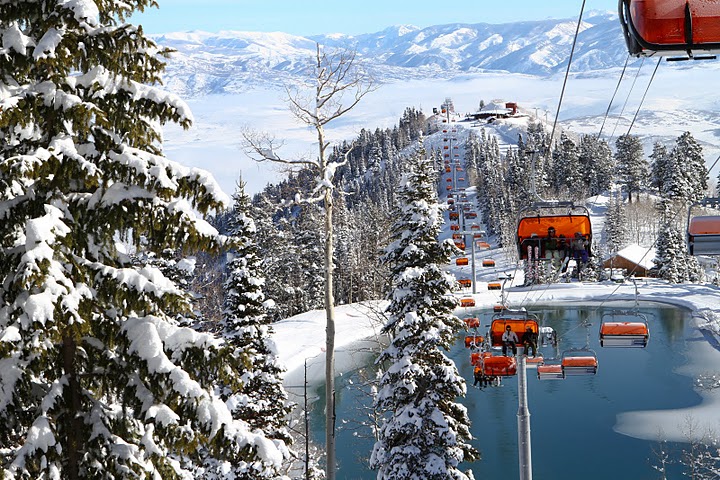
After years of trekking all over North America via lengthy plane rides, icy ravines, blizzards and winding mountain roads feeling more like the high traverse at Alta, I needed a mountain with easy access yet great skiing. It was the year our first daughter (22 months) was learning to ski. Extremely exciting! Unfortunately, the slopes were no longer in our back yard as much needed family support and jobs pulled us to the mid Atlantic coast. The nearest slopes were a 5 hour drive and options were small hills and limited terrain rather than inspiring mountains and deep powder. Complicating matters we all know that plane rides with toddlers are usually difficult but following that by a lengthy drive in the car and it’s far from pleasant for all parties involved. It was a major dilemma.
To find a solution, I put together some criteria for my search; a direct four hour flight or less, maximum 1 hour drive, ski in – ski out (convenient for the little one), fun family activities, reasonable cost and of course great snow and terrain for Mom and Dad. After searching some of my favorites and reviewing a slew of new mountains, the answer became abundantly clear. Canyons Resort now Park City, Utah! It is well known that Utah gets incredible amounts of dry snow and as some put it, “The Greatest Snow on Earth.” Canyons in particular gets close to 400 inches per year. However, there were a number of other factors that quickly pushed Canyons to the top of the list including easy access, terrain, first tracks, beautiful ski in – ski out accommodations at a reasonable cost, great food from Utah’s top chef or restaurant, many fun family activities and best of all heli ski tours. At this point, I was shaking with excitement.
Sitting still is not my daughter’s forte so easy access was key and the trip to Park City couldn’t be simpler. There are tons of direct flights from all over the nation to Salt Lake and multiple direct flights from the mid Atlantic region. The average flight is ~4 ½ hours and the mountain is only a 35 minute drive from the airport on mostly well maintained highway. Ski in – ski out was also extremely important as my daughter needed multiple breaks to recharge. At 6,800 feet, The Grand Summit Hotel was a perfect choice as it is steps from the children’s lower learning area, Red Pine Gondola and Orange Bubble Express lifts. These two major lifts from the village area are the gateway to all of the mountain’s vast terrain.
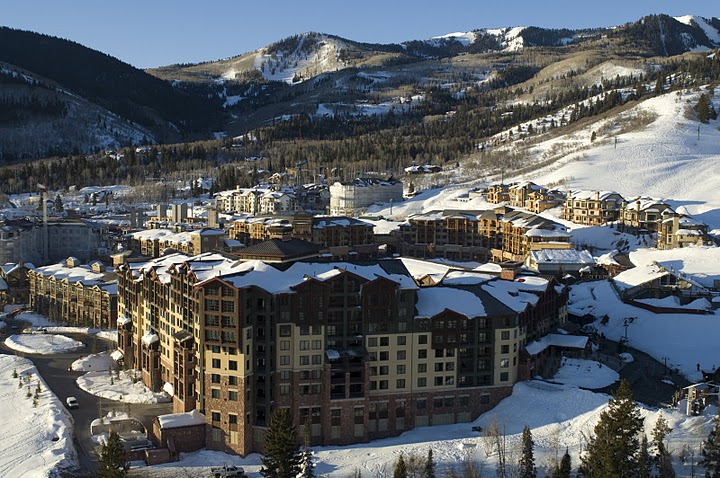
However, the Grand Summit has more to offer than just prime skiing outside of your doorstep. This four star hotel has artfully decorated studios to 3 bedroom suites most with fire places and full kitchens. We recommend the one bedroom suite with kitchen and living area. The outdoor heated pool is an expansive warm bath with three adjoining hot tubs to relax your muscles after a great day on the slopes.Chloe There is also access to the pool from an inside door to limit cold weather exposure when getting in. At the Grand Summit and festive surrounding village, restaurant options are plentiful. First Tracks café is a great place to grab your morning coffee and a light breakfast. The Red Tail Grill has a full service bar, outdoor seating overlooking the ski beach and a southwestern menu.
The newest restaurant to the culinary scene, The Farm, is led by Executive Chef John Murcko who was recently named “Best Chef” in Utah by Salt Lake magazine’s 2011 Dining Awards. It also boosts spectacular views of the mountain and has a terrific menu all locally sourced from a 300 mile radius. We recommend the Grass Fed Beef Oxtail Onion Soup and the assorted cheese platter. In particular, the Barely Buzzed Cheddar Cheese with hints of lavender and espresso was delightful and a specialty from the Beehive Cheese Co. If you are feeling more adventurous, there are scenic 30 minute sleigh rides through Willow Draw followed by a 4 course gourmet meal at The Cabin. We also recommend the Alpine House specializing in smaller but delicious plates. With free shuttle service offered by the hotel to Main Street in Park City, you can also try Talisker On Main recently named “Best Restaurant in Park City” by Salt Lake magazine’s 2011 Dining Awards.
After an exquisite dinner, I whisked my daughter off to story time before bed and my wife indulged herself in a luxurious spa treatment from the Grand Summit Spa and Health Club. With many massages to choose from including full body, facial, foot, hot stone, couples and wedding packages to name only a few, you are sure to fine a service that will leave you in a more rejuvenated state. For those looking for a little more action, there are tours for snow shoeing, dog sledging and snow mobiling available from the Grand Summit concierge. One unique feature sure to be of interest are “Groomer Ride-along” or “Groomer Ride and Drive” for those wanting a piece of the action creating world class groomers.
Although amenities make for a relaxing trip, skiing and riding are the main reason for a trip to the Wasatch Mountain Range in the freezing temperatures of winter. In Utah, the snow is legendary for its dry and light characteristics. With the crowds gallivanting past to Park City and Deer Valley, locals attest that fresh powder can be found days after a storm due to sheer size and limited traffic. Hence the real focus here is on terrain and mountain adventures. Utah’s largest resort, Park City’s terrain is extremely varied and expansive with 4000 skiable acres, 9 peaks and 3,190 feet of vertical rise. The terrain is split between mostly intermediate and advanced / expert slopes with limited ~10% beginner trails. My daughter is a quick understudy.
The first characteristic that caught my attention were the double blacks in Red Pine Bowl topping out at 9,990 feet, giving the name to the servicing lift, and Murdock Bowl off of Super Condor Express. These bowls are gnarly, steep and filled with deep powder at the highest elevations. Before you plunge into jaw dropping excitement, be sure to stop, take a deep breath of the crisp mountain air and take in the spectacular view. It’s simply amazing. The tree lines in Red Bowl can be particularly challenging but outstanding. To find the best untracked snow, Murdock Bowl is the place after a hike up the ridge following the poles on the far left when facing the mountain. As you exit the bowl, be sure to check out Canis Lupus, a natural half pipe below the first few chutes. This is a shear rocker and great fun to explore!
If you are a mogul chaser like me, there are a hand full of double black chutes just waiting to be explored on skier’s right off Super Condor Express. Yard sale is popular for its plethora of bumps. These slopes are southern facing so be cautious of conditions. If the serenity of the glades is on your agenda, Condor Woods to skier’s left off the same lift is enticing where the trees are tighter packed but not as steep. Other areas that are well worth the trip are the tree lines off Saddleback Express or Peak 5. When skiing through the ropes on Peak 5, be cautious of the cliffs that can be found below. This area has high avalanche danager and is constantly bombed by the ski patrol forcing the snow to the bottom of the slope and exposing rocks. Just remember to stay to skier’s right and keep a watchful eye out for the known hazards. Furthermore, two incredible tree filled chutes straight ahead off Tombstone Express that will test your quick turn ability are Deshutes and Grande. Should you take Short Cut lift to get back to the base of the mountain, be sure to check out Super Fury which is a great black diamond mogul run.
If you are looking for less traveled areas consider Dream Peak and Iron Mountain. Dream peak contains a number of mogul runs and spaced trees for the more advanced. When in the area, check out Cloud Dine at the top of DreamCatcher and DreamScape lifts. Its a great new restaurant focusing on healthy foods. Iron Mountain is the newest area of the resort to open and has a wealth of blues to choose from with a few glades. Both of these peaks can be an excellent choice in or immediately after a storm when the extreme slopes may be temporarily closed due to avalanche danger. Just be mindful of time in this area as it takes some lift hopping or a long groomer to get back to mid mountain.
Additional blue trails are found interspersed throughout the mountain off many lifts. Many of the blues are well protected from tree lines and have excellent fall lines. Single and double blue squares designate gentler from steeper groomers. Dreamscape, Day Break and Peak 5 lifts feature many of the gentler slopes where Super Condor Express and Tombstone feature more challenging blues. Behind the Red Pine Lodge at mid mountain is the upper children’s learning area and to the right facing the mountain is High Meadow dedicated to beginners. Kokopelli into Main Line or Echo are good advancing steps for beginners looking to be more adventurous.
Mountain adventures are plentiful at Park City and it’s another reason the mountain is so attractive. Back when its name was Park West, Canyons gained in popularity with snow boarders who found the mountain full of natural half pipes and terrain parks. Today the six natural half pipes are found on the map and the terrain-park crew is constantly innovating the most unique and versatile features for every ability level. If you have the know how, a skilled buddy, a beacon and shovel and are looking for extreme skiing, there are two access points to the back country off of Ninety-nine 90 Express and Peak 5.
Another epic backcountry option for access to pure powder and an addictive adrenalin rush is heli-skiing with Wasatch Powderbird Guides. The heli pad is just yards from the Red Pine Lodge at mid mountain and the day begins at the heli lounge to the right of the Sundial Lodge arch with skiers’ breakfast and orientation. Several adventures are available and can include up to seven runs followed by après-ski lunch served by the Alpine House’s highly respected chef and staff. My wonderful wife treated me to a day of heli-skiing with Wasatch Powderbird Guides and it was an amazing experience. They create a friendly and fun environment and treat customers like family. The guides are extremely experienced and maintain a high regard for safety to minimize potential risks (thanks Spencer, Logan and Chris for a great trip). Their pilots are also highly skilled and land the helicoper less than a foot from team on every pickup. I highly recommend a trip with Wasatch Powderbird Guides during your trip to Utah.
In all, Park City provides great skiing and riding, numerous activities, fine dining and luxurious amenities without the crowds for more reasonable rates. First hand experience has taught me that limited traffic and good snowfall on a well protected mountain is better than exposed and high traffic mountains with the highest snow fall levels. The varied terrain and challenging expert slopes are sure to be fun for the entire family at all ability levels. Its also important to note that this was the friendliest mountain I ever visited with terrific staff. In addition, heli-ski options are outstanding and can be the highlight of any trip. After a brilliant and relaxing time on and off the mountain, I highly recommend Park City for your next family ski vacation.
Jay Peak
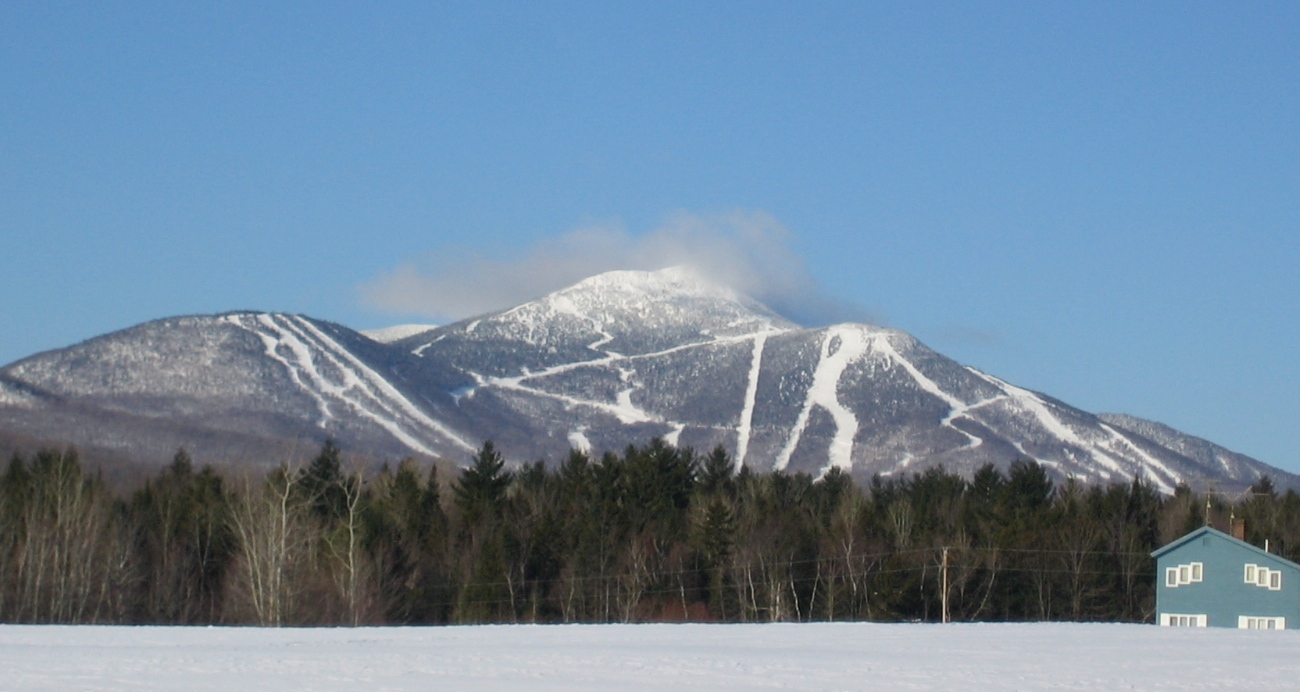
Ski Enthusiast’s experience at Jay Peak was simply amazing due to its epic terrain, breathtaking views, pristine snow conditions and quality design. Celebrating their 50th anniversary in 2005, Jay Peak continues to bring out skiers’ and riders’ passion for the support. With over 355 inches of snow fall a year, incredible glades, gnarly chutes off the peak, challenging mogul runs and Vermont’s only aerial tram, Jay creates a true big mountain experience.
The one thing that stands out most about Jay Peak is its superb terrain and quality design. Jay has everything a skier could hope for: renowned glades, challenging chutes off the face, steep, deep mogul runs that seem to last forever, winding groomers, big air terrain parks and excellent beginner terrain. The lift and trail layout also enables all the terrain to be accessed with only two lift rides and either base lodge can be accessed directly from both peaks. This makes it extremely easy to hit the best slopes and meet friends and family for lunch or après ski without wasting time trekking across the mountain.
jayimageSki Enthusiast cannot say enough about Jay Peak’s glades. Not only are there excellent expert glades to challenge elite skiers, but there are also great intermediate and beginner glades. Among Ski Enthusiast’s favorites were Everglade, Timbuktu, Kitz Woods, Beaver Pond Glade and Canyon Land. It was exhilarating to maneuver in and out of the trees, absorb moguls, duck branches and enjoy the serenity only the glades can bring. The trees were also well spaced for rhythm development yet preserving difficulty. Two other steep and gnarly glade chutes were Deliverance and Vertigo. Both were extremely difficult and challenged your ability to make quick turns and avoid natural obstacles. Some of the easier glades for intermediate / expert skiers were Bonaventure and Show-off Glades. For those just starting out in the glades, Moon Walk Woods and Bushwacker were good choices before graduating to Kokomo. (Photo by Skye Chalmers Courtesy of Jay Peak Resort)
Jay Peak also has a host of great mogul runs. Ski Enthusiast’s favorites included Kitzbuehel, Upper Can Am, Lift Line, Upper Milk Run, Power Line and UN. The upper half of Power Line was the least aggressive of the group and UN held the title for being the most difficult. The second set of moguls on Lift Line was also an excellent place to practice your skills due to its more moderate slope. There were also interesting moguls on the skiers’ right of The Jet. The top was particularly fun because you had to time the chair lift to avoid hitting your head on the lift.
A trip to Jay is not complete without riding the Tram and skiing off the peak. For intermediates, the Vermonter and Northway are magnificent, winding groomers with spectacular views of the surrounding landscape. For experts looking for a challenge, there are plenty of opportunities including Face Chutes, Tuckermans Chute, Green Beret and Valhalla. Be forewarned that the entries are typically more difficult than the trails themselves as they are riddled with ice, rocks and other natural obstacles. However, they are manageable using caution and well worth the reward of skiing these exciting, steep chutes and glades.
With all this information on expert terrain, it is important not to forget that 60% of the mountain is dedicated to novice and intermediate skiers. Some of the great groomers not previously mentioned include Ullr’s Dream, Montrealer and Wedelmaster. There are also intermediate runs from every lift. Furthermore there is an extensive beginner area on the lower mountain.
Snow and weather conditions during Ski Enthusiast’s trip were nearly perfect … temperatures in the lower to mid 30’s, blue skies and powdery snow throughout the mountain. In the woods and on the bumps, snow quality was phenomenal with excellent coverage and very few bare spots. Many groomers also had superb snow. On the second day, the sun did soften some of the exposed trails but the snow never became slushy. The few scratchy areas that were found were limited to higher wind and traffic areas (sections of Northway, Upper Goats Run and Ullr’s dream) and were easy to avoid.
Jay Peak features three lodges: the State Chalet, Tram / Austria Haus (main base lodge) and the Sky Haus at the top of the tram. The Tram Haus features a large seating area and cafeteria dining. There are also plenty of storage areas and lockers for ski bags and gear. The small deck in front of the lodge is a popular area to enjoy a draft beer on a warm spring day. The Austria Haus houses the International Restaurant (a.k.a. IR) and administrative offices. The IR serves a buffet lunch and is much quieter and less crowded than the cafeteria areas. The State Chalet is a smaller lodge on the left side of the mountain where most of the locals congregate. It also features cafeteria dining. If you would like to take advantage of the shorter tram lines during lunch, the Sky Haus offers a small sit down area with prepackaged food options and drinks.
Overall Ski Enthusiast’s adventure at Jay Peak was incredible and it is highly recommended that you plan a weekend to explore the mountain. With the best terrain in the east, it is guaranteed you will not be disappointed.
Bretton Woods
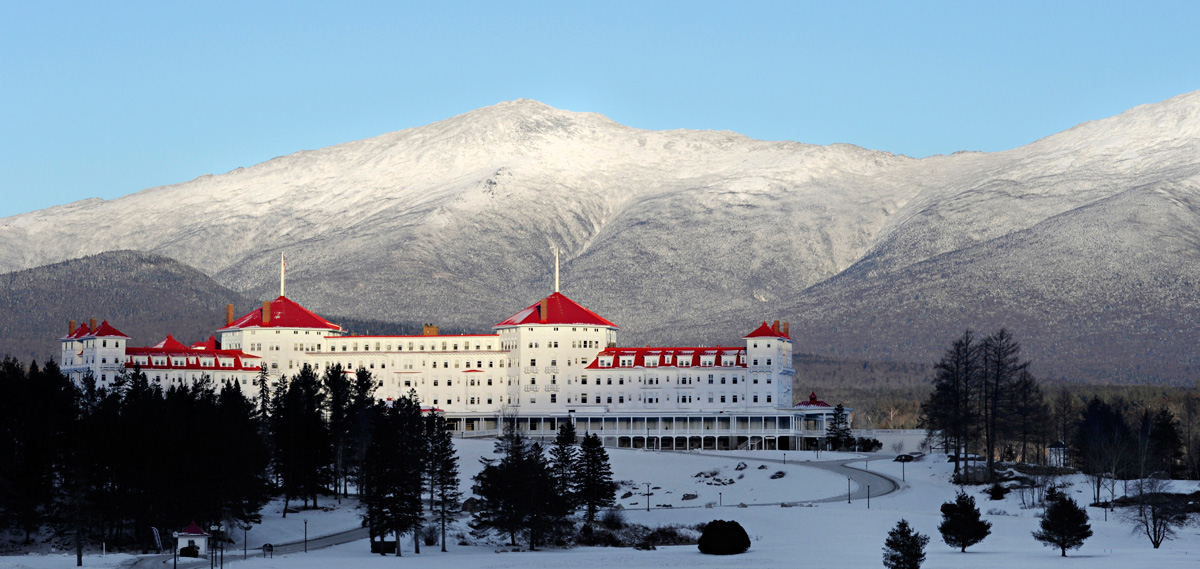
Ski Enthusiast’s time at Bretton Woods was an extraordinary experience. Excellent conditions, spectacular views, diverse terrain, gnarly glades, comfortable and clean lodging, fine dining and superior service made this trip extremely memorable. With Bretton Woods’ commitment to transform itself into a tour de force, it well deserves the national acclaim it receives. Intensifying the most difficult trails with creative design, expanding expert terrain, improving snow making capacity, adding new groomers and improving ski school programs are just a few of the measures Bretton Woods is implementing to simply get better every year. Photo courtesy of The Mount Washington Resort at Bretton Woods.
People who have skied Bretton Woods in the past (5+ years ago) may have considered it an intermediate mountain. However, recent expansions of many new trails and glades have changed this completely. On Mt. Rosebrook, you will find the steeper terrain on McIntire’s Ride, Bode’s Run, Zealand and Snake. If you follow Diamond Ridge past the entrance of the Rosebrook quad, you will also find Deception Bowl and Darby’s Drop. Bode’s Run and Deception Bowl have excellent ungroomed powder on the skiers’ right side of the trail. Two of Ski Enthusiast’s favorite trails were Snake and Darby’s Drop which are designated mogul runs with excellent, deep bumps to challenge expert skiers. Roz’s and Inferno were also among my favorite bumped up glades in Rosebook Canyon. Both are narrower chutes that require quick turning and good absorption to master. On West Mountain, I also really enjoyed Boundary Line, Maple Woods and John Grave’s Glades and all will make you work up a sweat. A few of the tighter glades to challenge your ability include Devil’s Den, Fastfall and Jump Turn. Although they are short and sweet, they are steep, gnarly and filled with obstacles to make it through in one piece.
One of the best features of Bretton Woods is their extensive intermediate groomers and glades. On West Mountain, Glade West, Blowdown Alley, Cherry Mountain Slide, Peppersass and Wild West were the more challenging intermediate/expert glades and were extremely fun. Aggassiz leading into Millennium Maze was a great place to find an abundance of powder due to lower traffic. On Mt. Rosebrook, Black Forest Glade is an easier start for intermediates looking to explore the glades for the first time. Enchanted Bear Glade is an excellent next step after you conquer Black Forest.
If glades and moguls are not your thing, there are plenty of blue groomers and easier terrain off of every lift. In addition, Two Miles Home is a gentle intermediate trail for new skiers looking to challenge themselves and explore. A short cut to Two Miles Home is Panorama were you can enjoy spectacular views of Crawford Notch.
Conditions at Bretton Woods were simply superb during Ski Enthusiast’s trip. They received 14 inches of new snow ~3 days before the trip and an additional 6 inches during our stay. On Saturday morning, Ski Enthusiast skied 8 runs of untouched power on and off piste on West Mountain before people migrated over around 10 AM. As we explored the mountain throughout the weekend, we were able to find a continuous supply of powder on all types of terrain. There were very few instances where we encountered a patch of ice or bare spot in the woods. Over all, the cover was excellent and the best I have seen all season. In times when natural snow is not plentiful, Bretton Woods has beefed up their snow making with 5 miles of new capability. The biggest secret to their pristine snow quality is their 200+ inches of annual snow fall, excellent grooming (ranked in the Top 10 in North America by Ski Magazine), excellent wind protection and limited crowds that prevent the mountain from being skied off. As a testament of their high quality snow, Bretton Woods enjoys the longest ski season in New Hampshire from early November to early May.
Ski instruction at Bretton Woods also keeps getting better through making personalized service a top priority. Two of the newest programs for this season are “Team Bode” and “Ski the Woods”. “Team Bode” is a recreational ski program for kids ages 6-12 and will improve their skiing skills and allow exploration of the mountain terrain. “Ski the Woods” is for ages 16 and up and pairs skiers with certified instructors for a fun program of skiing and learning that will improve skiing in the glades and throughout the mountain. Both programs run for 6 weeks (1/8-2/12 and 3/5-4/9) on Saturday mornings from 9 am to noon.
The base lodge at Bretton Woods has a definite rustic feel and warmth to it that makes it a wonderful place to rest, eat and enjoy friends and family between runs on the mountain. The ground floor features ample seating and convenient storage space for setting down gear and preparing for the slopes. Exposed wood beams and black steel tension rods add to the natural beauty of the lodge. The main cafeteria is located on the ground floor, with seating areas on both the first and second floors. A special treat for those who enjoy fireside dining is the large freestanding fireplace in the middle of the second floor. The fireplace is often a popular spot to set up gear to dry and defrost your hands while enjoying a casual meal. In addition to the cafeteria on the ground floor, the lodge includes two casual sit-down dining areas on the second floor. Large glass windows boast slope side views while you dine. Bretton Woods also features the Top o’ Quad restaurant that has a magnificent mountain-side view of the valley below as well as hearty meals. It is also a great place to get away from the hustle and bustle of the base lodge.
Set amidst the backdrop of Bretton Woods, Mt. Washington Place Townhomes is a cozy and spacious option for your next ski getaway. Each unit includes a full kitchen, open layout for the living and dining areas complete with a magnificent fireplace, washer and dryer, and a conveniently designed entry room where wet gear and clothing can be removed prior to entering the main living space. Ski Enthusiast’s unit had two bedrooms complete with their own full bath, with an additional half bath on the main floor. Ski Enthusiast found the bed extremely comfortable and was pleased to find that the unit was quiet during the evening hours. The unit was also extremely clean and well-maintained. An added convenience is that the Townhomes are located within an easy three minute drive of Bretton Woods. Rental of a Townhome also includes use of the Resort’s Sports Club (indoor heated pool, Jacuzzi, steam room, racquetball courts, exercise and weight rooms) and the Resort Shuttle. You may also want to consider purchasing the Passport which offers access to an array of complimentary and discounted amenities, activities, clinics, attractions and entertainment.
The beauty of Bretton Woods is that there is simply too much to explore and fun activities to enjoy to only stay two days. Other than alpine skiing and riding, activities include Nordic skiing, snowshoeing, winter trail hiking, snowmobiling, sleigh rides, ice skating and snow tubing. In addition, it is highly recommended that you splurge on a classy evening at the Mount Washington Hotel for fine dining and wine complimented with live jazz music. After dinner, it is also recommended that you hit the Cave, a former speakeasy from the era of the Prohibition, for live musical entertainment, dancing and cocktails. For people looking for an alpine ski adventure, don’t miss the Mount Washington Cog Ski Train that will transport you up the mountain to ski a western sloped groomed trail (terrain is either easy or intermediate).
Overall, Ski Enthusiast found Bretton Woods to be a truly enjoyable experience. With outstanding skiing and a plethora of activities, Bretton Woods is a fabulous resort for your next ski vacation.
Mad River Glen – Ski it if you can
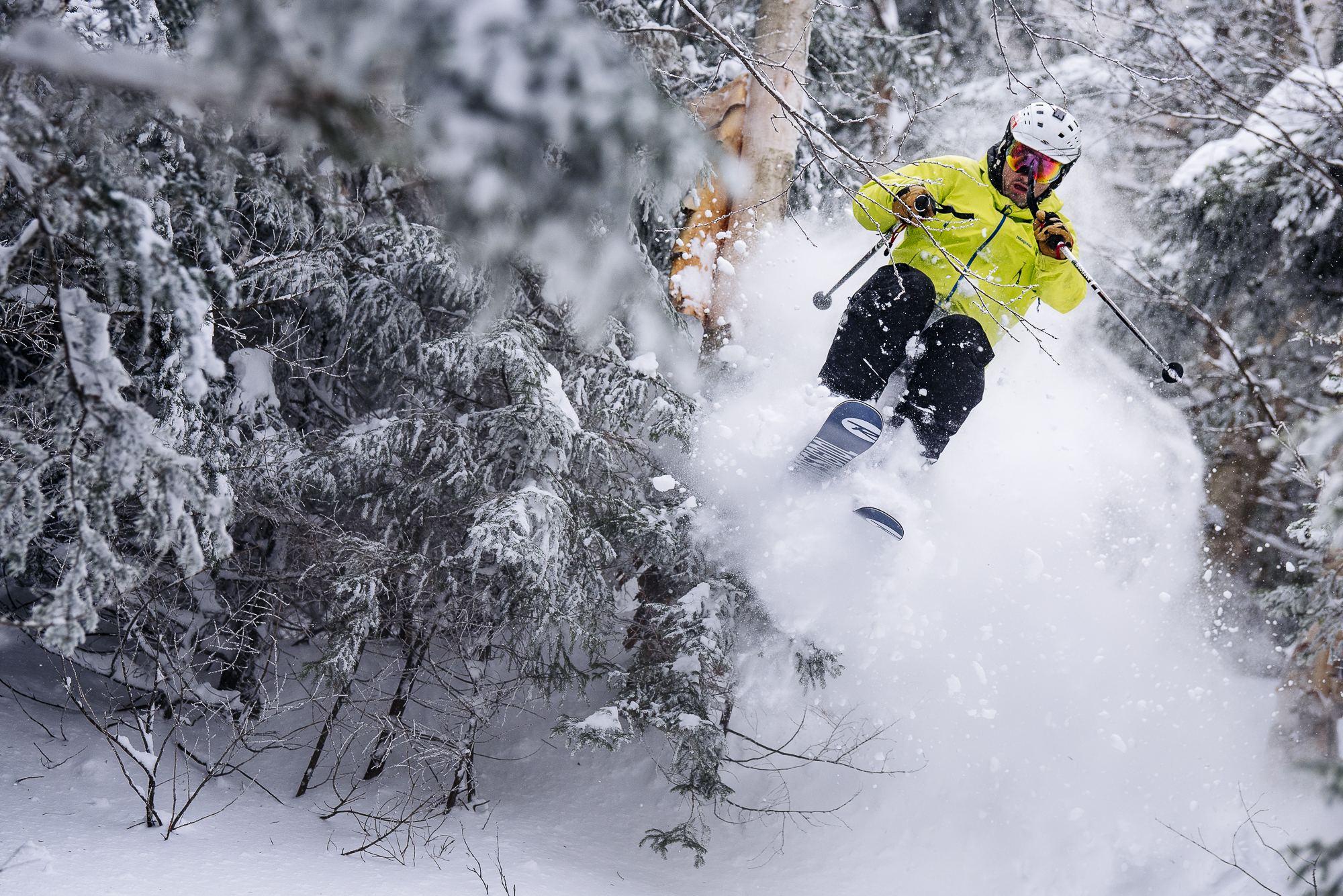
At Mad River Glen, skiing is in its purest form. Natural snow, nostalgia, low skier density, challenging and varied terrain, unmarked woods that let you cut your own lines, no commercialism and environmental preservation all contribute to the unique experience. Owned by a cooperative of shareholders, Mad River Glen’s philosophy is to protect and enhance the experience rather than to change it and to foster a sense of community among those who ski its legendary terrain. To further maintain the area’s unique character, shareholders choose not to allow snowboarders.
When you ski Mad River Glen, it’s all about the terrain with a prevalence of glades and mogul runs to choose from. One of the unique qualities of the mountain is that many of the glades are unmarked. This allows the skier to find his/her own path adding to the adventure and excitement of the experience. All of the woods in between the single chair and Fox Trail are prime for skiing with the terrain becoming steeper and gnarlier to skier’s left. Three Falls is the most challenging of the group and is reserved for those who are a little crazy in the head and enjoy cliff jumping between narrow platforms. For those interested in backcountry adventures, the 20th hole can be found from a narrow, unmarked entrance off of Upper Antelope. Follow the traverse a short distance and you will find access to challenging narrow chutes and glades. This is often a great place to find untracked powder days after a storm. On a weekday, it is important not to ski too far to skier’s right. Otherwise, you will miss the catwalk back to Lower Antelope and will need to hike back along Route 17. On weekends, Mad River Glen runs buses to carry explorers back to the base of the mountain if you go too far. If that is not enough to quench your backcountry appetite, the mountain directly opposite the single chair (on the other side of Rt. 17) is all skiable terrain and locals hike in from several spots along the road. As part of a plan to protect this great glade skiing for future generations, the mountain sets aside “regeneration zones” of young trees and brush that will eventually replace older trees when they reach the end of their life.
For those looking for moguls, your choices are abundant. Among Ski Enthusiast’s favorites include Lower Antelope, Slalom Hill, and Gazelle. Chute and Lift Line are also incredible runs that give you the opportunity to show off in front of a highly vocal audience on the single chair. Fall Line and Paradise are also legendary for their steep and varied terrain. For intermediate skiers beginning to explore moguls, Upper Quacky and Periwinkle are excellent choices. Upper Antelope is also a windy groomed intermediate trail off the single chair for added variety. Novice skiers can also enjoy Mad River Glen with skiing from lifts 2 and 3 while taking advantage of the low skier density on the mountain. It is also important to note that there are free mountain tours provided on weekends and holidays at 10 AM. You can sign up at the ticket office.
threefallsConditions at Mad River Glen are completely dependent on the weather as there is only limited snowmaking capability on higher traffic, lower mountain trails. However, with 250 inches of natural snowfall a year and low skier density, conditions are superb even days after a storm. The mountain is also well protected from the wind enhancing the snow quality.
Part of the unique experience the mountain has to offer is its nostalgia. There are no high-speed quads and little slope side development (only small homes scattered along the landscape). The mountain also boasts one of only two single chair lifts in North America. However, it does hold the title for the longest and fastest (in North America) and will get you to the summit in approximately 12 minutes. By limiting uphill capacity, Mad River Glen is able to maintain low skier density. As a compromise for this great quality, skiers may encounter a bit of a line on Saturdays and busy holidays. The base lodge also preserves this classic feel with 70’s styling and only necessary modern enhancements. One convenience worth noting is a free internet booth to check the weather, your e-mail or a score from a game the night before.
Overall, Ski Enthusiast’s trip at Mad River Glen was excellent and it is highly recommended that you explore the mountain’s unique experience.
Lake Lousie & Sunshine
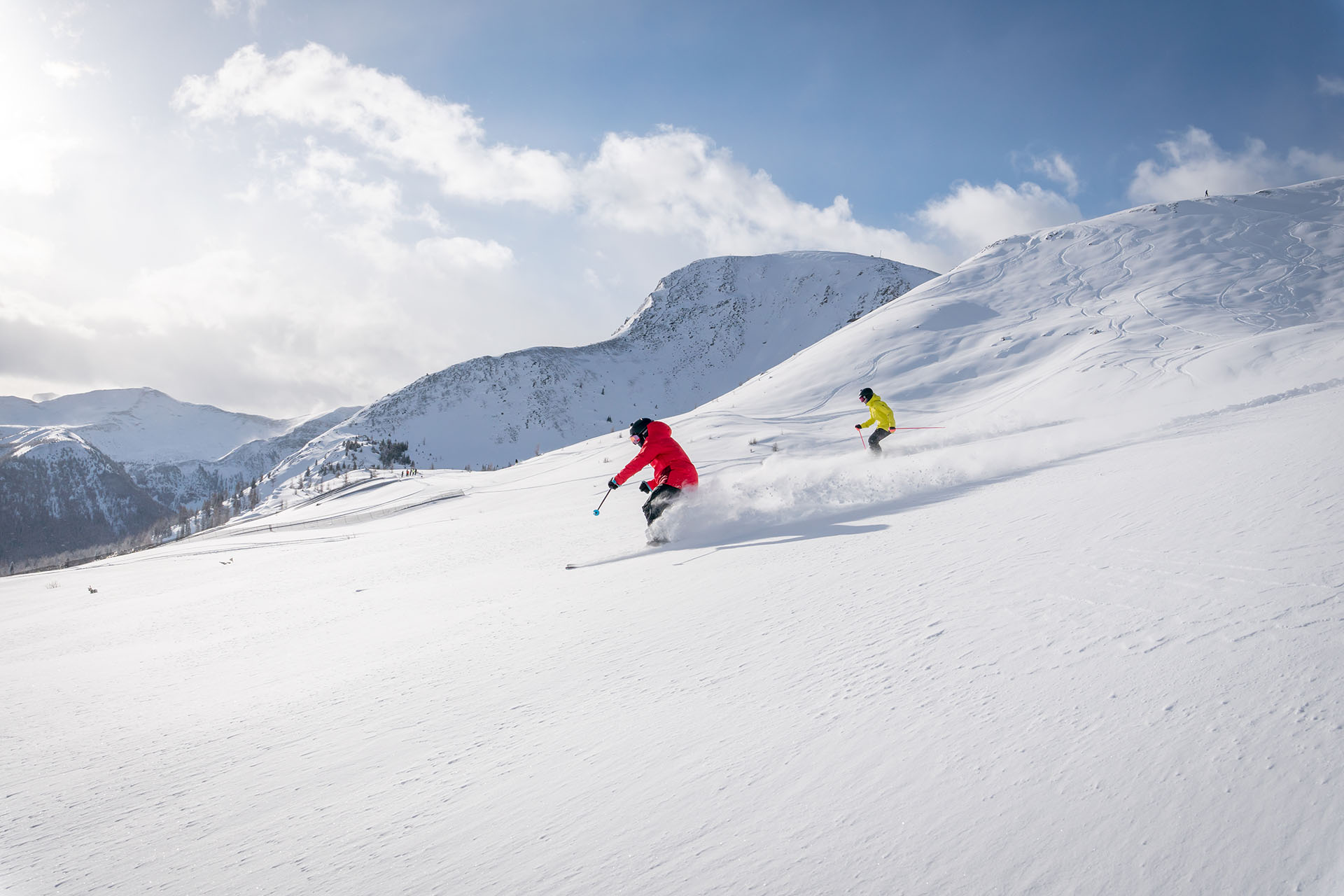
Majestic scenery, challenging terrain, strategic design, quality snow and friendly, knowledgeable staff make Lake Louise and Sunshine world-class resorts. With nearly five million visitors per year to Banff National Park and only one million during the winter months, the region offers many excellent hotel deals and fewer crowds to make it a great destination for your next ski vacation.
Banff National Park is located within a short drive of Calgary Airport in Alberta, Canada. This region is world-renowned for its spectacular beauty. The jagged snow-covered peaks of the Canadian Rockies inlaid with numerous evergreens, dazzling displays of frozen water falls and glaciers provide breathtaking views even the locals cannot get enough of. One natural wonder that immediately catches your attention on the drive between Sunshine and Lake Louise is Castle Rock as it reflects the golden colors of the sun. The national park is also home to an abundance of wildlife; it is not uncommon to catch a glimpse of elk or moose along the side of the road.
Lake Louise is an extremely diverse mountain with great expert terrain (30%) and a wealth of intermediate (45%) and beginner trails (25%). With a vertical rise of 3250 feet and 4200 skiable acres, there are 113 named runs and a large off piste area. Lake Louise is accessible by seven well-positioned lifts including a six passenger gondola (opening Feb 05), one high speed six passenger lift and two high speed quads that make lift lines almost nonexistent.
The most efficient way to access both the front face and back bowls are by the Glacier Express quad / Top of the World six passenger lift combination or the six passenger gondola. Once you reach Eagle Ridge, there are several beginner, intermediate and expert runs to ski and ride. If you are interested in the steeps, the ER 7 gullies are located directly off the Top of the World chair. At a peak elevation of 8650 ft, you can also find some of the gnarliest chutes and the best snow on the White Horn 2 Gullies off the Summit Platter lift. Another less traveled area is “The Diamond Mind” off Paradise Chair. However, although these runs are superb, they are extremely steep and you will need to navigate around cliffs and protruding rocks. If moguls are your thing, definitely check out Paradise Bowl off the Paradise chair and Exhibition, Ptarmigan, Raven and Lower Old Ptarmigan off the Ptarmigan Quad. You can also hit Tickety Chutes on your way to the Summit Platter lift. If you are looking for the serenity of the trees, your choices are plentiful. There are excellent glades off either side of the Ptarmigan lift, to the right off Larch Express quad and under the Eagle chair (soon to be replaced by the Gondola). You can also find decent glades under the Top of the World and Olympic chairs. There is also plenty of terrain for beginners and intermediates with access via almost any lift from the front face to the back bowls. One interesting intermediate trail off the beaten path is Meadowlark on the far right of the mountain.
Lake Louise also has an incredible Showtime terrain park built by world-renowned architect Jeff Patterson. Showtime has beginner, intermediate and advanced lines from small tables, hops and rollers to the most progressive tables (up to 70 ft) and super technical rails with new features being installed weekly. It also features a super half-pipe and 20 ft quarter pipe all easily accessible off Glacier Express quad. It is also important to note that the landings were well maintained.
On the mountain, there are four modern and nicely positioned lodges to meet the needs of the guests. The most beautiful lodge is the Lodge of Ten Peaks. This log structure was actually created from trees taken from the Fall Line Glades when the area was thinned for skiing and riding. To comply with local logging regulations, groups of logs were air lifted by helicopter to the site of construction. One of the most convenient lodges at Lake Louise is Temple lodge located near the base of the Ptarmigan lift. This is a great place to rest and renew yourself after conquering some of the challenging runs on the back bowls. The mid-mountain Whitehorn lodge is home of the Torchlight Dinner. This buffet feast is accompanied by live entertainment from a favorite local band that provides an excellent atmosphere to dance and celebrate with friends and family. After the festivities come to a close at the lodge, skiers and riders are equipped with head lamps for a safely guided tour down the mountain. It is also important to note that the food and service at the lodges I visited were excellent and offered at a reasonable price.
Sunshine is another excellent mountain in Banff National Park with the longest vertical drop in the Canadian Rockies: 3514 ft from the top of Lookout mountain to the base of the gondola. Sunshine also receives over 30 feet of natural snow annually, and with a peak elevation of 8954 feet, snow conditions are typically light and powdery. You can also count on virtually no lift lines as skiers and riders can access 12 different lifts including 5 high-speed quads. Sunshine also has an excellent balance of terrain for all levels with beginner (22%), intermediate (31%), expert (42%) and double black expert trails (5% of the trails are considered some of the most challenging in all of North America). Photo of skier at Sunshine by Mike Moynihan.
A day at Sunshine begins with a ride on one of the world’s fastest 8 passenger gondolas. From the parking lot to the base of Goat’s Eye, it takes approximately six minutes and the village can be reached within a short thirteen-minute ride. The Goat’s Eye Express quad provides access to both intermediate, advanced and expert terrain. A quick traverse to the right of the lift brings you to some premier and extremely steep expert terrain. This area is well above tree line so be cautious if you ski it under flat light conditions. The snow in this area is protected from some wind patterns and can be softer than the area directly beneath the lift if you don’t hit the mountain on one of their many powder days. Also accessible from Goat’s Eye Quad are glades (Goat’s Glades and Hell’s Kitchen) and mogul runs (Super Model, Free Fall, Glade Runner and After Burner). Angel Express quad also services beginner, intermediate and advanced terrain. Boundry Bowl, South and North Pocket, School Marm and Tee Pee Chutes (better protected by the wind) are excellent mogul runs. This is also a good place for beginners to get a bowl experience. Continental-Divide Express quad brings you to the top of Lookout Mountain. This area is above tree line and skiers and riders (intermediate and advanced) can choose their own path off piste.
For expert skiers looking for extreme double black terrain, Sunshine’s Delirium Dive and The Wildwest freeride zones will put your skill and nerve to the ultimate test. Be forewarned: this area is not for the weak of heart as this is extremely steep terrain riddled with unmarked rocks, cliffs and other obstacles.
In order to ski/ride in Delirium Dive or The Wildwest, skiers and boarders must be equipped with a personal avalanche beacon and shovel and travel with a partner who is equally equipped. Keep in mind that the mountain does not rent this equipment, so you will need to purchase them at a local ski shop. One can access Delirium Dive by a short uphill hike from the top of the Continental-Divide chair. The Wildwest can be accessed via the Sunshine Coast run on Goat’s Eye mountain.
Mt. Standish is a third peak at Sunshine with interesting terrain and sensational views. The snow in this area is often better than average because it is mostly protected from the wind. In addition, you can find challenging chutes and mogul runs here. Meadow park is also a very scenic and fun beginner trail. Check out the great view (right) of Lookout Mountain from the top of Mt Standish.
Sunshine has several lodges spread throughout the mountain to meet the needs of the guest. The Main Daylodge located in Sunshine Village has a deli and cafeteria in addition to a Lookout Bistro where you can sit by a warm fire and take in incredible views while serviced by the wait staff. The Old Sunshine Lodge features the Mad Trapper’s Saloon and is the place to be après ski at Sunshine Village. If you are in the vicinity of Goat’s Eye mountain, you can also enjoy breakfast or hot meals and drinks throughout the day at Goat’s Eye Gardens. Creekside Bar and Grill at the base of the Gondola is also an excellent place to have a beer after the day is done and share stories about the day’s challenging runs or reminisce about times past. The food and service at the lodge I visited were excellent and offered at a reasonable price.
Snow Quality at Sunshine and Lake Louise:
Despite unseasonably warm weather and rain followed by freezing temperatures (worst conditions seen in 40 years claimed one older gentleman I met), both mountains had surprisingly good snow in many places. The extreme chutes in the higher elevations had the best snow and the base of the mountain had loose granular conditions. However, in all cases, the snow was grippable unlike the solid ice found sometimes in the east. Fortunately, these conditions only lasted a couple of weeks as the mountains received a dumping of light powder the last two days of my trip (15-20 inches deep). Amazingly, due to the limited crowds, I was able to ski over seven runs in untouched powder. Quite frankly, this was one of the best powder days I have ever experienced. The snow was incredibly light and heavenly to ski through. Due to consistently colder temperatures, snow also tends to stay drier and last longer in the Canadian Rockies in comparison to other North American resorts. This prolongs the ski season from mid November through May. In comparing the two resorts, I found that Sunshine is less protected and more prone to being wind-blown. However, it also receives more snow on average per year than Lake Louise. In talking to the locals, I discovered that the weather patterns are different on each mountain, resulting in conditions that are sometimes better at one mountain than the other. Bottom line is both mountains have quality snow and great terrain and it is recommended that you ski both during your trip.
Both Sunshine and Lake Louise have informative and friendly staff. I was pleasantly greeted by lift operators continually throughout the day and the ski patrol provided good advice on trail conditions. One opportunity you should take advantage of is the tours provided by the mountains. Both Sunshine and Lake Louise offer beginner and intermediate tours. This is a great way to see different parts of the mountain you may not experience on your own. In addition, the ski schools also offer classes on extreme terrain if you would like to check them out first with a local pro. The staff that lead my tour was extremely friendly and provided great terrain tips for the mountain.
Overall my experience at both mountains was wonderful and you should strongly consider Banff National Park for your next ski vacation